Town of Orono Route 2 Corridor Planning Study
Sebago Technics partnered with the Town of Orono to reimagine the Route 2 corridor as a safer, more connected, and more livable community gateway. Through a collaborative, community-centered planning process, the team built on former studies and delivered practical, visionary solutions that improve walkability, bikeability, and traffic safety, while supporting the corridor’s vital regional role. The resulting plan gave Orono a clear path forward, positioning the Town for long-term infrastructure investment and a more vibrant, people-first future.
Location
Orono, Maine
Sector
Municipal
Services
- Transportation Engineering
- Traffic Engineering
- Environmental Services
- Surveying & Geomatics
- Planning & Permitting
- Virtual Design / 3D Modeling
Completed
2025

THE CHALLENGE
Route 2 serves as a critical connection through Orono, linking Interstate 95 to the University of Maine.
The corridor supports a diverse range of users: residents, students, university staff, and visitors. It is heavily traveled, with volumes reaching up to 14,000 vehicles per day, depending on location.
With just a single travel lane in each direction, the corridor struggles with congestion during peak school hours, drivers exceeding posted speed limits, and infrastructure that doesn’t meet current pedestrian or bicycle standards. Key intersections, such as Goodridge Drive, Rangeley Road, and Washburn Place, have been identified as high-crash locations, with crash patterns tied to poor visibility, failure to yield, and limited turning capacity.
The corridor also lacks consistent sidewalks, visible crosswalks, and dedicated bike lanes, leading to accidents and unsafe interactions between vehicles, pedestrians, and cyclists. For example, rear-end crashes were commonly tied to vehicles stopping for pedestrians in crosswalks, and areas like Westwood Drive and Goodridge Drive experienced queuing and turning delays that directly impacted access to local schools.
Facing these safety and mobility issues, the Town sought a long-term, corridor-wide solution that would balance modernization with Orono’s historic, walkable village character.

A place to live, work & thrive
Sebago Technics led this planning effort with a clear goal: to help Orono become a safer, more connected, and more vibrant place to live, work, and thrive. We would manage this all without compromising Route 2’s essential function as a regional transportation corridor. Through a community-centered process, we worked closely with Town leaders, regional partners, and residents to deliver a 3.25-mile plan that is technically rigorous and deeply rooted in public priorities.
Approach, continued
First, community input
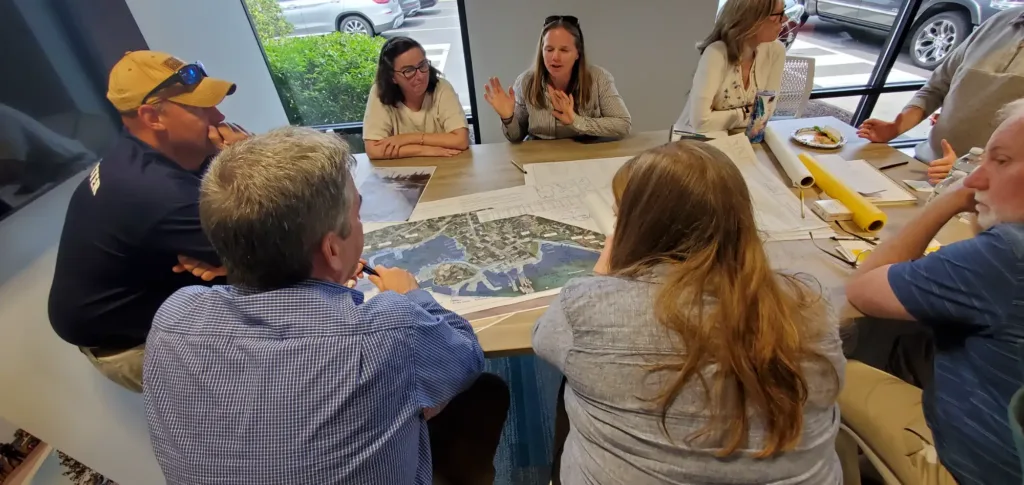
We started with meaningful community engagement. We gathered over 100 comments and concerns from residents, businesses, school representatives, and the University of Maine through public meetings, one-on-one discussions with property owners, and a dedicated email feedback channel. Community members identified clear needs: safer pedestrian infrastructure, slower vehicle speeds, and a corridor that better reflected Orono’s character and daily experience. This feedback informed several design alternatives, refined and advanced through stakeholder conversations.
With that input in hand, we revisited the corridor’s planning history, building on our own 2021 Main Street Safety Study and other efforts dating back to 2017. We worked with Town staff to integrate previous recommendations and identify gaps caused by phasing or funding limitations. This allowed us to shape a holistic, future-ready strategy that honored existing investments while delivering greater value to the community.
Next, we turned to technical analysis. Our team conducted a corridor-wide safety review and identified four high-crash locations. We modeled traffic operations using Synchro/SimTraffic to evaluate performance through 2043, and we completed signal warrants and turn-lane evaluations at key intersections. This data-driven approach helped us identify locations with failing Levels of Service and guided the development of responsive, site-specific interventions.
Our proposed solutions embraced MaineDOT guidance and Complete Streets principles to ensure access and comfort for all users, not just vehicles. We designed ADA-compliant pedestrian networks, proposed dedicated 5.0-foot bicycle lanes where feasible, and introduced advanced safety features such as Rectangular Rapid Flashing Beacons (RRFBs), refuge islands, and shortened crossing distances. Three strategic roundabouts were evaluated for traffic calming and gateway enhancement, and ornamental esplanades and median islands were added to reinforce the corridor’s village identity.
In areas with specific infrastructure needs, we delivered practical, forward-thinking engineering. At Johnny Mack Brook, for example, we proposed SmartStream culvert technologies to improve stormwater management and aquatic connectivity. Across the corridor, we addressed utility conflicts and drainage concerns and created phased implementation strategies aligned with potential funding sources, including MaineDOT’s Heads Up and Village Partnership initiatives.
Using immersive 3D visualizations and virtual design tools, we created realistic renderings that helped residents, Town staff, and state officials clearly envision how proposed improvements (roundabouts, esplanades, bicycle facilities, and traffic-calming features) would look and function in real life. Our visual tools supported more productive public feedback and more confident decision-making by eliminating vagueness around complex intersection treatments and corridor changes. They empowered stakeholders at every level to see the project’s full potential and helped unify support for a $35.8 million investment in Orono’s future.
The Results
A shared vision
The Route 2 Planning Study delivers a clear, comprehensive plan to enhance safety, mobility, and livability along one of Orono’s most important corridors, while staying grounded in fiscal responsibility and community priorities.
This work was made possible through strong collaboration with the Town of Orono, MaineDOT, Bangor Area Comprehensive Transportation System, the Federal Highway Administration, the University of Maine, and local utility partners. Our ability to communicate technical design through clear visuals and inclusive engagement helped unify stakeholders and build momentum behind a shared vision and set the stage for meaningful improvements that will benefit the corridor for decades to come.