What is Photogrammetry?
Photogrammetry is the science of applying mathematics to photographs to extract accurate 3D measurements. The word photogrammetry is a concatenation of the words “photo” (light), “gram” (record), and “metry” (measurement). The original methodology first appeared as artists began creating more realistic paintings in the 14th century.
The History of Photogrammetry
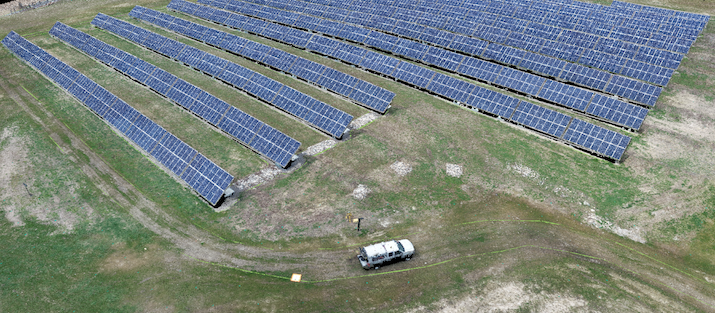
The concept of measuring pictures dates back to the Renaissance. As artists strive to generate realism in their works, they begin to understand the application of mathematics could improve paintings by more accurately representing the subject of their works. These formulas and methods would continue to be refined and improved up to the invention of the camera around the turn of the 19th century. The combination of these concepts and the accuracy of photography allowed photogrammetry to become more widely used as a tool for measurement.
Types of Photogrammetry
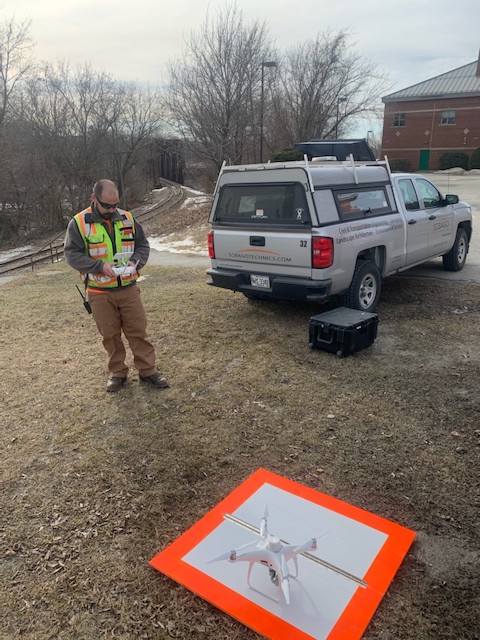
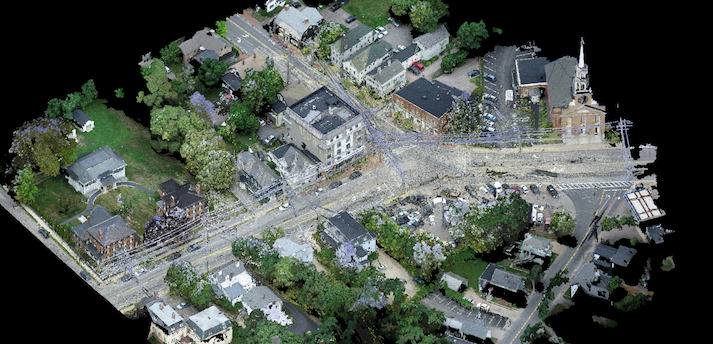
In photogrammetry, there are two main methods for collecting photographs. Pictures can be taken on traditional tripods set on the ground, known as terrestrial photogrammetry. Objects can be measured stereoscopically in three dimensions by taking multiple overlapping photos. With the development of drone technology, photographs can also be taken in the sky. Affixing a camera to the bottom of an aerial vehicle allows high-resolution images to be collected across hundreds or thousands of feet. This method of photo collection is known as aerial photogrammetry. Each method can be used individually or jointly, depending on the needs of the project or task.
Aerial photogrammetry is generally utilized on large or difficult-to-access sites and can cover large areas quickly, while terrestrial photogrammetry is more object-focused. The scale of the project will determine the best methodology for a photograph collection.
What is Produced by Photogrammetry?
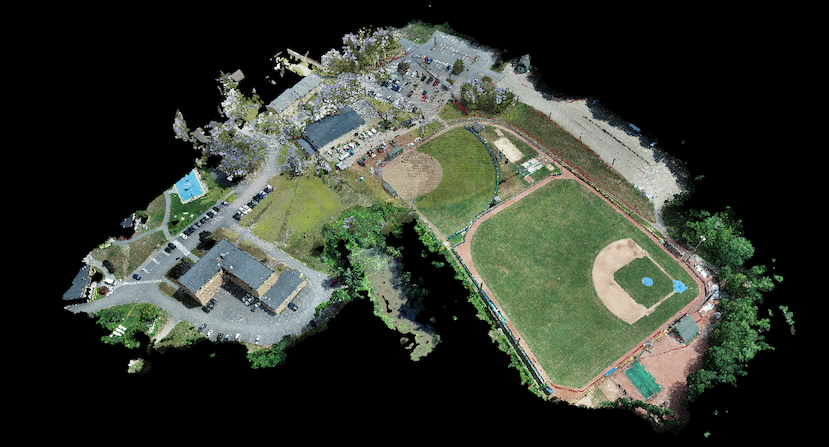
The measurements produced by this method can be utilized to generate orthorectified aerial images for drafting software such as AutoCAD or fully three-dimensional point clouds for use in modeling software such as Revit and Cyclone. These datasets and images act as the base for the existing conditions of an object or site that will be utilized during a project’s information gathering, surveying, and design processes.
Why Is It Used?
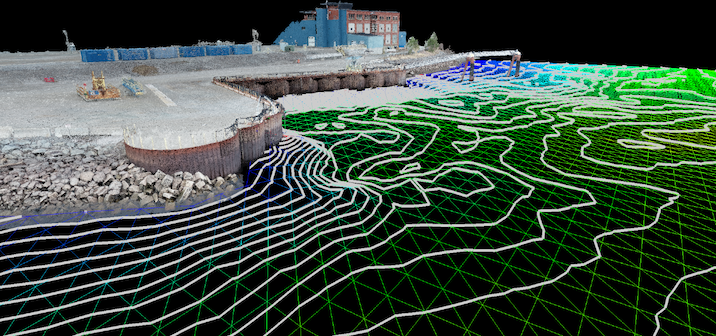
The plans and models produced by photogrammetry are necessary for design professionals and surveyors to measure the world around us accurately. No matter the project’s scale, photogrammetry’s versatility allows the data to be collected accurately. Civil engineers use this technology for grade surfacing and site inspection, while digital modelers leverage datasets to model statues and building details. During the first Apollo landing, satellite images were used to determine a landing zone on the moon’s surface safely. The development of this technology has produced tools that significantly speed up data collection and accuracy, helping professionals perform their work more quickly and correctly.
Want to learn more about Sebago Technics’ aerial photogrammetry services? Contact Brian Williams, PLS (207-200-2130) to discuss your project needs.
Related posts
Dig into project updates, industry insights, and thoughtful perspectives from the people shaping our communities.